
Key Takeaways
- Gingivitis is early, reversible gum inflammation, while periodontitis is a more advanced infection that can damage the bone supporting your teeth.
- Red, swollen, or bleeding gums are common to both, but loose teeth, deep pockets, and gum recession point toward periodontitis.
- Gingivitis can usually be reversed with professional cleanings and good daily care.
- Periodontitis cannot be fully reversed, but it can be managed with proper treatment and regular maintenance.
- A dental exam with gum measurements is the only reliable way to know which condition you have.
Book an appointment(opens in a new tab)
Gingivitis vs Periodontitis: The Short Answer
Gingivitis and periodontitis are both forms of gum disease, and one often leads to the other. Gingivitis is the first stage, when plaque irritates the gums and makes them inflamed. Periodontitis is the advanced stage, when the infection reaches below the gumline and begins to damage the supporting bone.
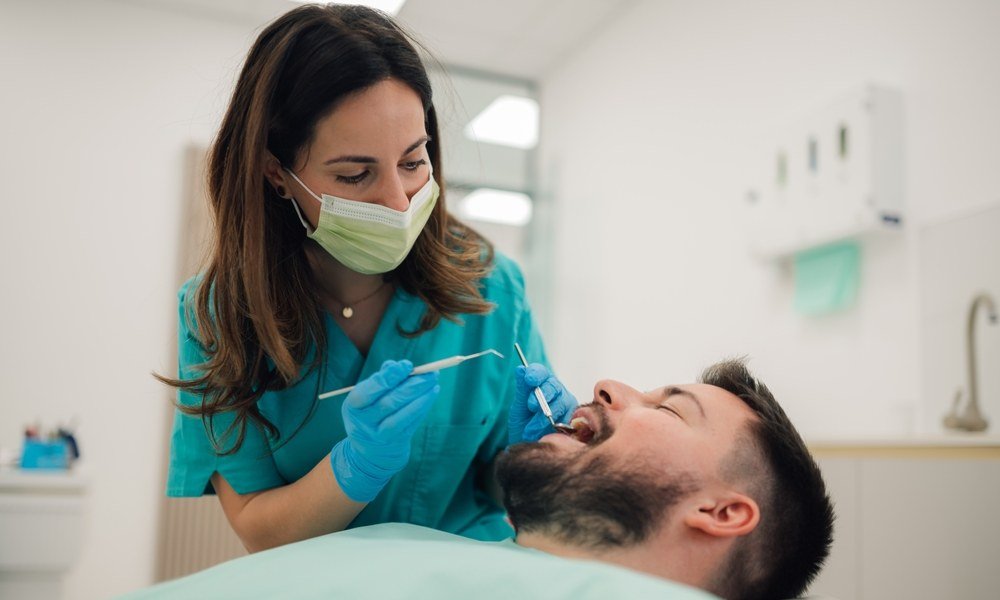
The main difference is whether damage has reached the structures that hold your teeth in place. Gingivitis affects only the gum tissue and can be reversed. In periodontitis, bone and connective tissue can be lost, and that damage does not grow back on its own.
Knowing where you fall on this spectrum helps you act early. Many people have gingivitis for months or years without pain, which is why regular dental visits matter even when your mouth feels fine.
What Is Gingivitis?
Gingivitis happens when plaque, the sticky film of bacteria on your teeth, builds up along the gumline. If it is not removed with brushing and flossing, it hardens into tartar, which only a dental professional can clean away. The gums react by becoming irritated and inflamed.
- Gums that look red, puffy, or shiny
- Bleeding when you brush or floss
- Bad breath that does not go away
- Tender gums, with no loose teeth
The good news is that gingivitis is reversible. A professional cleaning, along with better brushing and flossing, usually brings the gums back to health within a few weeks.
What Is Periodontitis?
Periodontitis develops when untreated gingivitis spreads. The gums begin to pull away from the teeth, forming pockets where bacteria can hide. Over time, the body's response to the infection, along with the bacteria themselves, can break down the bone that anchors your teeth.
- Gums that are receding or teeth that look longer
- Deep pockets between the teeth and gums
- Pus around the teeth or a persistent bad taste
- Teeth that feel loose, shift, or change how they fit together
Periodontitis can be quiet in the early stages, so you may not feel pain until the damage is significant. That is why an exam that measures the depth of your gum pockets is so useful.
Gingivitis vs Periodontitis: Key Differences at a Glance
The table below compares the two conditions. Keep in mind that symptoms can overlap, and only a dentist can tell you which stage you have.
| Feature | Gingivitis | Periodontitis |
|---|---|---|
| What is affected | Gum tissue only | Gums, ligaments, and bone |
| Reversible? | Yes, with care | Damage is permanent, but can be controlled |
| Common signs | Red, swollen, bleeding gums | Receding gums, pockets, loose teeth |
| Typical treatment | Cleaning and home care | Deep cleaning and ongoing maintenance |
Healthy Gums vs Unhealthy Gums
Healthy gums are firm, pale pink, and fit snugly around each tooth. They do not bleed during normal brushing and flossing. If you notice puffiness, a darker red color, or bleeding, your gums are telling you something needs attention.
Do not ignore small changes. Occasional bleeding after you start flossing again can be normal, but bleeding that continues for more than a week or two is worth a visit. Catching problems at the gingivitis stage is far easier than treating advanced disease.
What Causes Gum Disease, and Who Is at Risk?
Plaque is the root cause, but several factors can make gum disease more likely or more severe. Smoking and tobacco use are strongly linked to periodontitis, and they can also hide warning signs like bleeding.
- Poor brushing and flossing habits
- Diabetes, which can make infections harder to control
- Hormonal changes, such as during pregnancy
- Certain medicines that reduce saliva
- Family history of gum disease
Stress, poor nutrition, and teeth grinding can also play a role. Your dentist can help you understand which risk factors apply to you and what you can change.
How Gum Disease Is Diagnosed and Treated
A dentist or hygienist checks your gums for redness and bleeding, and measures the space between the gum and tooth with a small probe. X-rays may be taken to look for bone loss. These findings show whether you have gingivitis, periodontitis, or healthy gums.
Gingivitis is typically treated with a thorough cleaning and a plan for better home care. Periodontitis often needs a deeper cleaning below the gumline, called scaling and root planing, followed by regular maintenance visits. Keystone's periodontal care services(opens in a new tab) cover gum disease evaluation and treatment.
If gum disease has already caused your gums to pull back, see our guide to treatment for receding gums(opens in a new tab) to learn what options may help.
When Should You See a Dentist About Your Gums?
Book a visit if your gums bleed regularly, look swollen, or feel tender for more than a week or two. Persistent bad breath, gums that pull away from your teeth, or any change in how your teeth fit together are also reasons to be checked soon.
Do not wait for pain. Gum disease is often painless until it is advanced, so a routine exam is the best way to catch it. If you have a fever, spreading swelling, or pus near a tooth, call a dentist promptly, since these can signal an infection that needs quick attention.
How to Keep Your Gums Healthy
Daily habits go a long way. Brush for two minutes twice a day with a soft brush, clean between your teeth every day, and do not skip your routine dental cleanings. If you smoke, quitting is one of the best things you can do for your gums.
Pay attention to changes and call a dentist if something seems off. You can meet our dental team on the providers page(opens in a new tab), and learn more about Keystone Rural Health Consortia(opens in a new tab) and the communities we serve.
Request an Appointment With Keystone Rural Health Consortia Today
If your gums bleed, look swollen, or have started to pull away from your teeth, schedule an exam. Early care protects your smile and can prevent bigger problems later. The Bradford location(opens in a new tab) is one of several places to see us.
Keystone offers dental care in Bradford(opens in a new tab), Emporium(opens in a new tab), Kane(opens in a new tab), and Kersey(opens in a new tab), and you can see every Keystone office on the locations page(opens in a new tab).
This article is for general education and is not medical advice. Only a dentist who has examined you can diagnose gum disease and recommend treatment.
Book an appointment(opens in a new tab)
Frequently Asked Questions
What is the main difference between gingivitis and periodontitis?
Gingivitis is inflammation of the gums and can be reversed. Periodontitis is an infection that has spread below the gumline and can damage the bone supporting your teeth, causing lasting changes.
Can gingivitis turn into periodontitis?
Yes. If gingivitis is not treated, the infection can progress and become periodontitis. Regular dental cleanings and good daily care help prevent this.
Can periodontitis be reversed?
The bone and tissue damage from periodontitis does not grow back on its own, but the disease can be controlled with treatment and regular maintenance. Early care leads to better results.
Where can I get gum disease treatment near me?
Keystone Rural Health Consortia provides periodontal care at dental locations across Northern Pennsylvania. You can book online or call the office nearest you to schedule an exam.
